Is daylight saving really bad for us?
Being forced to suddenly wake up before your body's had enough sleep can have long-term health consequences, says Erik Herzog.

Clocks in New Zealand went back an hour this morning as daylight savings came to an end.
But adjusting our clocks twice a year - in order to make better use of the longer days - may not be good for our health, says professor Erik Herzog.
"When we switch to daylight savings time and lose an hour of sleep, we see a net increase in heart attacks, car accidents and other bad things that last for about three days," he tells Jim Mora.
Miriam Alonso
Related:
Is daylight saving bad for us?
Daylight savings, which only a third of the world's countries have adopted, is something most Americans want to get rid of, Herzog said.
"We have ongoing bills being debated in Congress, usually 2-3 bills per state in all 50 states.
"This year, for the first time, we have more bills in favour of permanent standard time than ever before."
Standard time may be better for humanity, Herzog said.
Changes to circadian alignment are akin to jetlag in which the body takes several days to adjust to a different time zone.
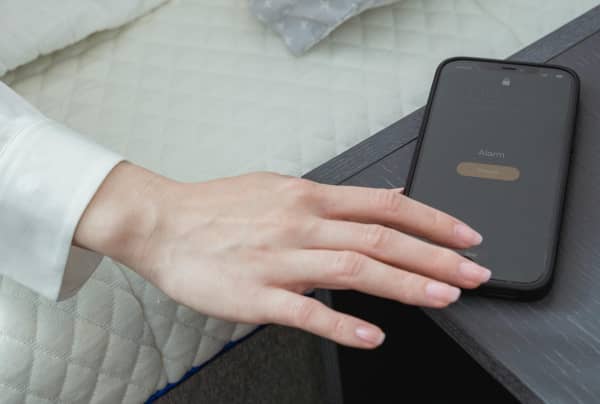
"If you're using your alarm clock to wake up, as many of us do, you're waking up unnaturally," he said.
"It turns out that alarm clocks and being forced to wake up when you're not done sleeping have long-term health consequences.
"I think it's doing you plenty of good - you feel good, your mood is elevated - but in terms of synchronising your circadian clock to local time, that light is tending to delay your bedtime and delay your wake-up time.
"The following morning, when it's time to get up and go to work or school, your biological clock is saying, 'No, no, no, I need to sleep for another hour, ' but your alarm clock is saying social schedules need you to get out of bed.
"You're sleep-depriving yourself and stressing yourself out, and we think those things have negative consequences on things like heart health and metabolic health.
"I love sunshine in the afternoon, sure. I love summertime, sure, but I think daylight saving time is not good for our health the way we run it now."
Herzog observed that 'falling back', as we have just done, can be beneficial, compared to 'springing forward'.
"We see in repeated studies around the world a decrease in car accidents the day after falling back," he said. "We see a decrease in heart attacks, and we see a decrease in a number of other health and crime-related statistics.
"In contrast, when we switch to daylight savings time and lose an hour of sleep, we see a net increase in heart attacks, car accidents and other bad things that last for about three days, but that's not the main reason I'm advocating for permanent standard time."


