New Zealanders going 'no contact' with a parent
Increasingly, estrangement between parent and child is the topic of therapy and social media posts.
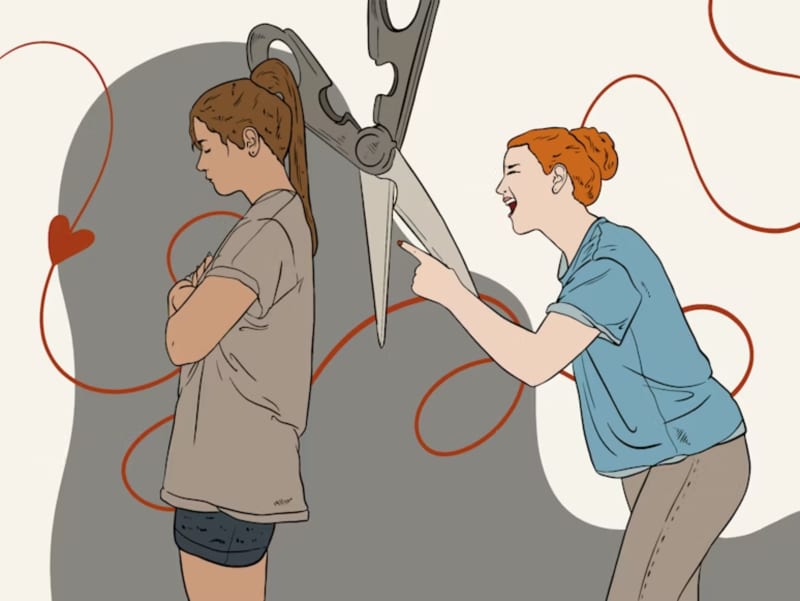
It wasn’t until Laura, a 46-year-old from Hawke’s Bay, became an adult that she began to view her father’s behaviour towards her as narcissistic.
He seemed to thrive on creating conflict between Laura and her sister.
He would switch between being lighthearted and friendly, to horrific and cruel, depending upon the day, Laura says.
Sara Oliveira/Unsplash
He always had to be right. He would use the tenets of his Buddhist faith to trample on her decisions or manipulate her into doing what he wanted.
“He always had excuses as to why everything I did was not good enough, everything I did let him down, and I couldn't, you know, I essentially didn't want to carry that anymore.”
Finally, a comment from Laura’s husband made the penny drop: you wouldn’t put up with a friend treating you like this, so why are you letting him?
“That was the trigger. Family doesn't get to be family just because we are all blood related.”
Laura decided that severing ties with her father was necessary to protect her mental wellbeing and her childrens'. She hasn’t spoken to him in seven years.
Laura is one of the likely thousands of New Zealanders who have severed their relationship with a parent, what the internet now refers to as “going no contact”. No figures exist in New Zealand for how common it is, or whether it is growing. However, a 2022 survey of 11,000 Americans found that about one in four were estranged from one or more immediate family members, with the most common source being a child ending a relationship with a parent.
If you explore the hashtag #nocontact on social media, you will find millions of posts containing advice on how to go no contact and those attesting to the freedom and mental wellbeing of cutting ties. There is also the side of parents who feel unjustly removed from their child’s life. Some have criticised this as a social contagion where a cornerstone relationship is too easily discarded. Others see it as progress that empowers people to rid themselves of a toxic relationship they never chose to be in.
Jon Hay, a psychotherapist at Auckland City Therapy, typically sees at least one client a day where estrangement is part of their family’s landscape. Often, it is clients in their 30s or 40s who are parents themselves, causing them to reflect on how they were raised or to protect their offspring from their childhood experience, he says.
“I see it more, but that doesn’t necessarily mean it wasn’t there,” says Hay, of the increase in family estrangement he has seen in his 20-year career.
“There’s so much shame with it that even in therapy, people are hesitant and sort of cautious of almost confessing because almost inevitably people would go ‘Blood is thicker than water and you’ve got to get over it and life’s too short’ kind of lazy comments from people.”
Research indicates that society's perception of what constitutes abuse has expanded to include situations such as parental alienation, where a parent involved in a separation attempts to break down a child's relationship with the other parent.
"We're a lot more open to talking about it and a lot less likely to put up with bulls**t, and I think that is a shift and that is a real generational shift..." says Kate Todd, an Auckland-based counsellor. She adds that unwillingness to tolerate what are deemed unhealthy relationships also comes across in the workplace and in friendship groups.
Jill Goldson has spent decades as a therapeutic mediator for parents in disputes around children at the time of separation. Increasingly, she is receiving referrals when a rift develops between a parent and an adult child.
Sometimes she sees family members who have looked to social media for mental health and conflict advice first. The concept of boundaries is a common theme for many of these clients, with some adult children describing an estranged parent as a 'narcissist', a person steeped in self-focus who lacks empathy, she says. (The Reddit page Raised by Narcissists has more than a million followers.)
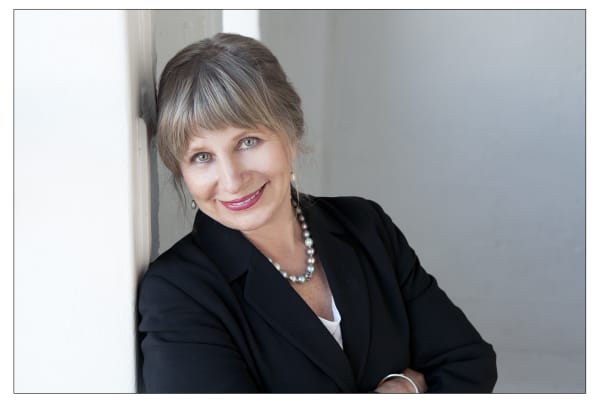
Jill Goldson
Ray Anderson
“Estrangement is typically a product of poor communication, resentment, and misunderstanding," says Goldson, the director of the Family Matters Centre in Auckland.
"It can manifest around money and perceptions of favouritism of siblings. Further to this is the presentation of blended families with difficulties between step-parents and adult children."
As part of reporting for this story, we heard from more than 30 people who say they are estranged from a parent. It was overwhelming and surprising that so many New Zealanders were willing to talk about a deeply painful and personal situation.
We spoke to a 42-year-old man from Nelson who has had no contact with his mother for 13 years, following a turbulent childhood where she quickly cycled through romantic relationships and encouraged the use of violence. A 34-year-old man described a childhood with family violence where his pansexuality (attraction to people regardless of gender) was ridiculed. He went no contact with his mother in 2022.
Sara Oliveira/Unsplash
Steph, a 34-year-old who was raised in Auckland, went no contact with her mother in 2015. She spoke of her siblings being clearly favoured by their mother. There was a host of other strains on their relationship, including her parents' divorce and a lack of support from her mother following a sexual assault incident.
“Christmas is for me a sad time... It’s either being in a room on my own or being in a room with mum and feeling even more alone.”
For those on the receiving end of a child’s no-contact wish, this time of year is an acute reminder that they are grieving the loss of a child who hasn’t died.
A 55-year-old mother from the South Island described a period of raising a daughter and a son who is on the higher-function end of the autism spectrum. Her daughter’s teenage years were plagued with fickle friendships and mental health struggles, but their parent-child relationship felt secure following those difficult years, the mother said.
However, three years ago, the mother received a letter sent via registered mail from her daughter in her 20s that used legal language outlining her daughter’s wish to have no contact with her mother. The letter stressed the main reason for going no contact was for the sake of the daughter’s personal growth and mental wellbeing.
“The letter didn’t feel like her voice at all. Is this a form letter? Did she take it from some sort of template?”
Since the letter, the mother says she has reflected on her parenting, including a period during Covid where she leaned too heavily on her daughter as a friend and confidant.
Sara Oliveira/Unsplash
“I would have liked to have heard it so that I could adjust my relating with her, my communications with her, and so I wonder about things like that, but it just went quite quickly and without open discussion,” says the mother, of her recollection of their relationship.
As for Laura, who hasn’t spoken to her father in seven years, she found a father figure in her stepfather. Her daughter is treated as a granddaughter by close friends of her late mother.
Laura’s daughter turned nine last week, and she is old enough to understand some of the family dynamics playing out around her.
“We talk about how we can have family by love and by blood, and that this family is by love and this family is by blood, and for her, it makes absolutely no difference.”


