The best protest record Nick Bollinger has heard this year
Haley Heynderickx and Max Garcia Conover are unlikely to become mainstream names, but their new album will bring hope to everyone who wonders what happened to protest songs.
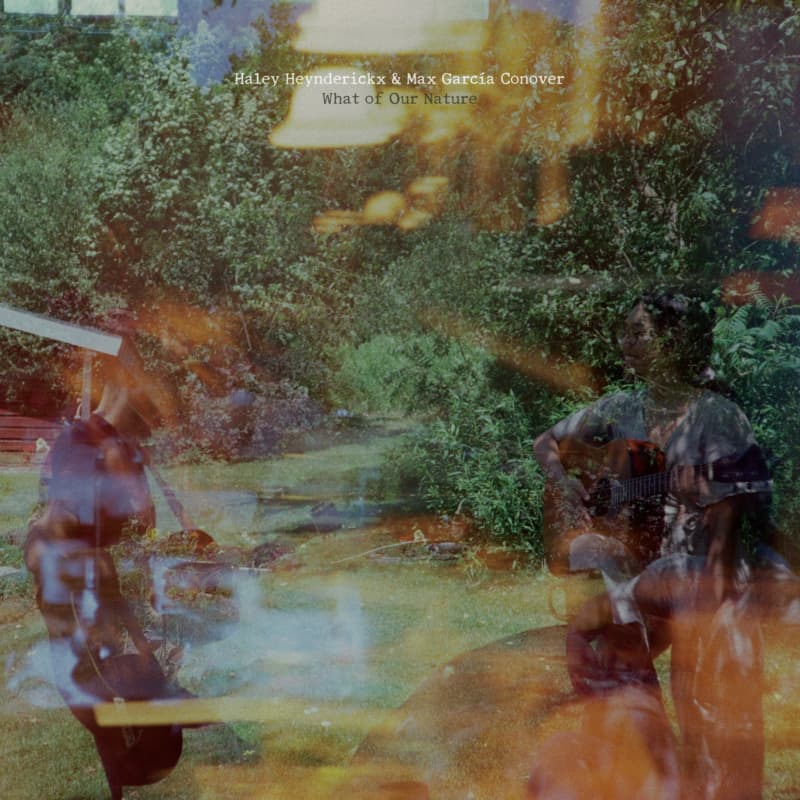
“Where are all the protest songs these days?” I often hear people ask. The world is more volatile than ever, and yet seems to be awash with songs about Korean demonology and Taylor Swift’s love life.
Those people should hear this album.
Haley Heynderickx & Max Garcia Conover are American singer-songwriters, from Portland and Maine respectively. They have been performing and recording individually for the past decade or so, and first recorded together in 2018. That was an EP, now they have made a full album.

What Of Our Nature is purposely handmade and lo-tech. They recorded it in just five days in a barn in Vermont, with the pair singing and playing acoustic guitars. The only additional instrumentation is some light percussion, which sounds like it was played on empty bottles and rattled matchboxes.
Haley isn’t exactly Joan Baez to Max’s Bob Dylan, but sonically the comparison isn’t far off. Her singing is strong, clear and melodic, while Max’s is a gruff whisper, leaning towards speech or rap. Somehow their voices blend beautifully.
In their past work they have often dwelt on pastoral themes, with a touch of mysticism. But for this particular set they consciously looked back to Woody Guthrie, father of the American protest song.
Guthrie’s songs, even more than the early Dylan’s, took the side of the poor and dispossessed. His sympathy for immigrants and refugees must have struck a particular chord with Haley and Max, both of whom come from immigrant families – Haley’s Filipino, Max’s Puerto Rican.
Max’s ‘Song For Alicia’, which opens the album, refers specifically to Alicia Rodriguez, a member of a militant anti-colonialist group, who was imprisoned in Chicago in the early 80s and remained there until pardoned by Clinton in the late 90s. But the song keeps returning the present, with a reminder that ‘they're still blaming us for their need/For a culture of ecstatic greed’ and of a ‘new precariat…convinced that immigrants are corporations’.
Haley’s song, ‘In Bulosan’s Words’, takes up the cause of the Filipino journalist and labour leader Carlos Bulosan, reminding us that the rights he fought for in America in the 30s and 40s are still being contested today.
Max is the wordier of the two. In ‘Boars’ he piles image upon rhyme, in the rapid-fire style of Dylan’s ‘Subterranean Homesick Blues’. But Haley achieves a similar sense of 21st century overload with the sparser lines of ‘Mr Marketer’. (‘The market is crowded, they've started to yell/The artist is selling sad nudes of herself/Saying,"I hope that this helps/I can't seem to tell’).
It’s serious, yet never sounds like a lecture or even a battle cry. They are more quirky and poetic than that. One of my favourite tracks is ‘Fluorescent Light’, as song that is simultaneously funny and sad, in which the mercury vapour/gas discharge lamp becomes a symbol for all the ugly end products of a consumer society, and a wistful reminder of what we’ve lost. ‘There was an ancient light/There was an ancient song’, they sing. ‘Now something isn't right/We live in fluorescent light’.
Haley Heynderickx and Max Garcia Conover are unlikely to ever become mainstream names— their principled aversion to marketing all but ensures it. Still, they’ve made the best protest record I’ve heard all year.

