The modern conundrum of scattering human ashes
With every milestone, including death, being shaped by social media, scattering ashes can become a spectacle that clashes with Māori beliefs and local bylaws.
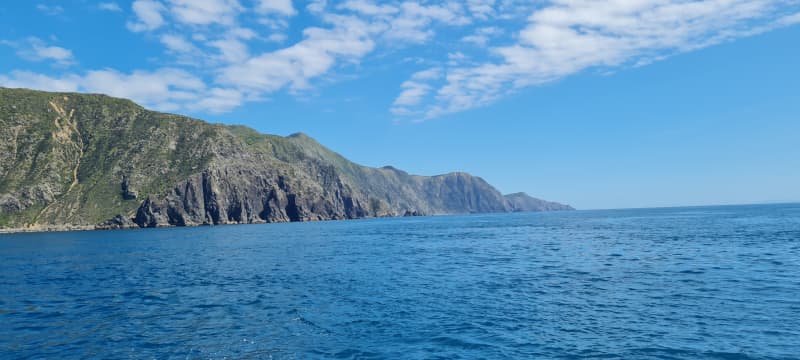
When it comes to scattering ashes, Andrew Malcolm, a funeral director of 42 years, has seen and done it all.
He leaned out of a helicopter in a hunter's harness and sprinkled someone’s remains over a forest (the deceased was a helicopter pilot).
He has hired numerous boats to head far out to sea, including a student memorialising a former teacher who had no family. The teacher was from Australia, so the student figured scattering her ashes between the coasts of Australia and New Zealand was a nice touch.
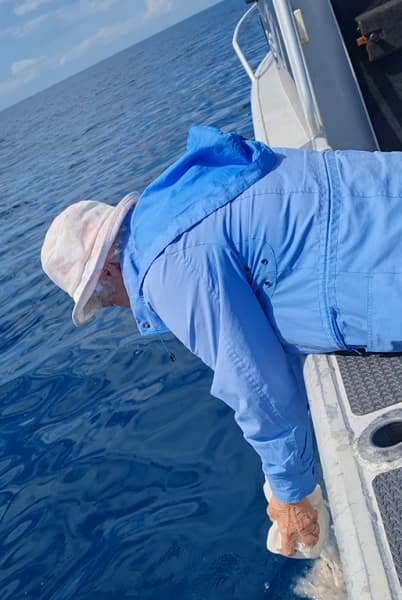
A former student scatters the ashes of a former teacher from a boat off the Kapiti Coast.
supplied
A client took his wife, in ashes form, on a van trip around New Zealand before handing her over for permanent interment.
Then, there was the client’s loved one, who got a bit sneaky. The deceased was denied their final wish to be scattered on a favourite golf course, so a family member poured the ashes into their trouser pocket, poked a small hole in it, and walked around the course with the ashes covertly trickling out.
“Obviously, they weren't going to do it on the green right next to the hole or something,” says Malcolm, who works at Kāpiti Coast Funeral Home.
“They just wanted to go in along the rough where it's all rough, and so they just came and told me afterwards.”
Ashes - what to do with them? It’s a question that we will likely mull over numerous times in our lives with New Zealand’s cremation rates inching towards 70 percent as of 2023. Opting for cremation is also growing among Māori, who have traditionally favoured burials.
Despite the growth in cremation, it isn’t always clear what is legally and cuturally appropriate in New Zealand when it comes to disposing of the results. Existing rules can clash with a new wave of creative, meaningful or outlandish means to get rid of ashes.
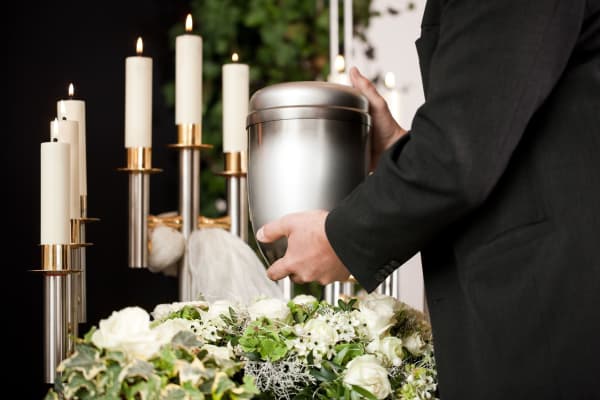
Some loved ones keep ashes in an urn stored at home for years.
kzenon/123RF
When cremation entered the mainstream around the 1960s, loved ones came up with novel ways to disperse ashes, says Malcolm. In the 1980s, it shifted to the more conservative option of scattering them in a memorial garden or interning them in a cemetery.
“...I think it's done a full circle and we're back to doing really creative and innovative things.”
You can have yourself blasted into space or tattooed into someone's arm or turned into paint for a beautiful artwork, or made into a jewellery bead.
“[You can] wear mum or dad in a piece of jewellery so [there are] loads and loads of practical ways they can remember their loved one,” says Gillian Boyes, chief executive officer of the Funeral Directors Association of New Zealand.
A global phenomenon
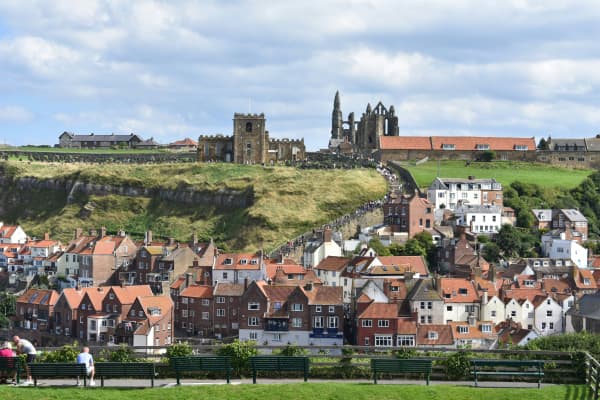
The town of Whitby, a key location in Dracula and a popular place to scatter ashes of fans of the 19th-century Gothic novel.
Martina Jorden/Unsplash
Travelling to an exotic or meaningful location to scatter ashes is so common now that Dr Duncan Light, a tourism expert from Bournemouth University in the UK, wrote a research paper about it in 2023. The research idea came to him on a visit to Whitby, the English town associated with the 19th-century Gothic novel Dracula.
“I went and sat on a bench there, and then I looked down and at my feet was this big pile of ashes, and I felt quite kind of perturbed and a bit almost resentful. And I got up and moved to another bench where I couldn't see the ashes.”
He heard of other instances where railway enthusiasts had their ash remains blown out of a steam engine's smokestack. However, “sometimes the ashes don't go up the chimney, they just blow back out over the driver and his assistant”.

Dr Duncan Light from Bournemouth University in the UK.
supplied
Iceland, a hotspot for Instagram-inspired travel, reported an influx of foreigners with no apparent connection to the country applying to scatter ashes. Scattering of ashes at Disney theme parks is so common that it has its own codenames among janitors: a code A or Hepa cleanup.
Light sees this partly as an extension of the trend to turn key milestones - a wedding, finding out the gender of a child, etc - into a social media moment. However, its impact can be jarring for those not grieving the deceased.
“... Scattering ashes can have an impact on other tourists, me in one case, and they could also have an impact on employees or volunteers or whatever who are not trained in any way to deal with the dead or human remains.”
Māori perspective on death
Te Rerenga Wairua (Cape Reinga), New Zealand’s picturesque northern tip, has attracted its share of unwanted grievers scattering ashes, says Ngāti Kuri kaumātua Graeme Neho. The local iwi issued a public notice in 2023 asking visitors not to bring human ashes for scattering, citing Māori culture that doesn’t mix the dead with the living. Besides drawing 120,000 plus visitors each year, the cape is held as a spiritual place of transition with Te Rerenga Wairua meaning a “leaping place of the spirits”.
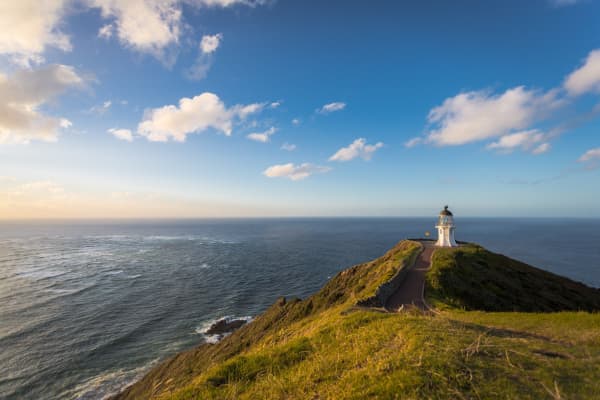
Lighthouse at Cape Reinga.
123RF
“The thing that annoys us there are kids, families with kids, you know, lying around on the grass and they don’t know that some idiot has dumped their ashes there,” says Neho.
Iwi representatives have found urns buried on the beach around the cape and received calls from overseas and around New Zealand enquiring about scattering ashes.
For Māori, scattering ashes on beaches, waterways, and other food-gathering areas changes the spiritual status of a place, says Larni Hepi, a funeral director and embalmer based in Whakatāne.
“When ashes are placed or scattered on land or into water, the tapu (sacredness) of that person is carried into that place. From there, the area is no longer noa (spiritually neutral or unrestricted) and is effectively treated as an urupā [a cemetery].”
What does the law say?
There are very few restrictions at a national level when it comes to scattering ashes, says Malcolm. However, councils often have much tighter bylaws. Auckland Council, for example, lists numerous prohibited areas, including volcanic cones and food-gathering areas sacred to Māori. All of Auckland’s regional parks, including the city’s botanic gardens, sports fields, waterways and beaches, are off limits.

Andrew Malcolm, funeral director from Kapiti Coast Funeral Home.
supplied
Ashes can be scattered on private property provided permission is sought from the owner. People can apply to scatter ashes in cemeteries and memorial gardens.
“Our regional park rangers and cemetery staff aim to inform people first and foremost about why it is so important to choose an appropriate place in a cemetery to scatter the ashes of their loved ones,” says Toni Giacon, head of regional operations for Auckland Council.
“We do not generally issue fines or confiscate ashes.”
Malcolm advises loved ones to speak with the funeral director they are dealing with about their scattering wishes to see if there are any local implications.
“I think there is a lot of myth around, you know, you can’t scatter them here, and you can’t do that. Well, you know, if you talk to the right people and they’re okay with it, then you can.”
But isn’t ash good for your garden and the environment?
Scattering ashes from your fireplace to fertilise your garden is very different from scattering human ashes, says Malcolm. A cremation furnace typically has a much higher temperature and goes through at least two chambers to incinerate even bones.
“There’s very little carbon left... after it's cremated, but there is a lot of heavy minerals like calcium and magnesium and phosphorus and so forth."
“That’s why ashes in a small box are so heavy because they’re heavy trace elements, so if the fish eat those, it’s not great for the fish, and if we eat the fish, it’s not great for us.”
That goes for plants, added Malcolm, who has heard instances of roses in memorial gardens dying due to the minerals being heaped on them through human ashes.
What about transporting ashes?
Posting or couriering human ashes in New Zealand is prohibited. However, members of the Funeral Directors Association of New Zealand can secure an exemption, says chief executive Boyes.
Your loved ones' ashes are “welcome” on Air New Zealand flights, according to the airline's website. You must inform staff at check-in and provide death and cremation certificates. Boyes advised storing the ashes in an airtight container that is x-rayable, so not stone or metal.
“[Airport security] needs to be able to see they really are ashes inside.”
Travellers must also check the requirements of their destination as well as any connecting airlines or stopovers on their journey, says Boyes. Different countries have different rules. For example, Germany has some of the strictest rules in Western Europe when it comes to burial and cremation. It is illegal in most states to keep an urn at home, and only recently have Germans been permitted to scatter ashes in select waterways.
It is common for loved ones to take some or all of the ashes to the deceased’s place of birth, Boyes says.
“[Hindus] ideally want them scattered on a river in India and will sometimes travel back to India to perform that ceremony.”

